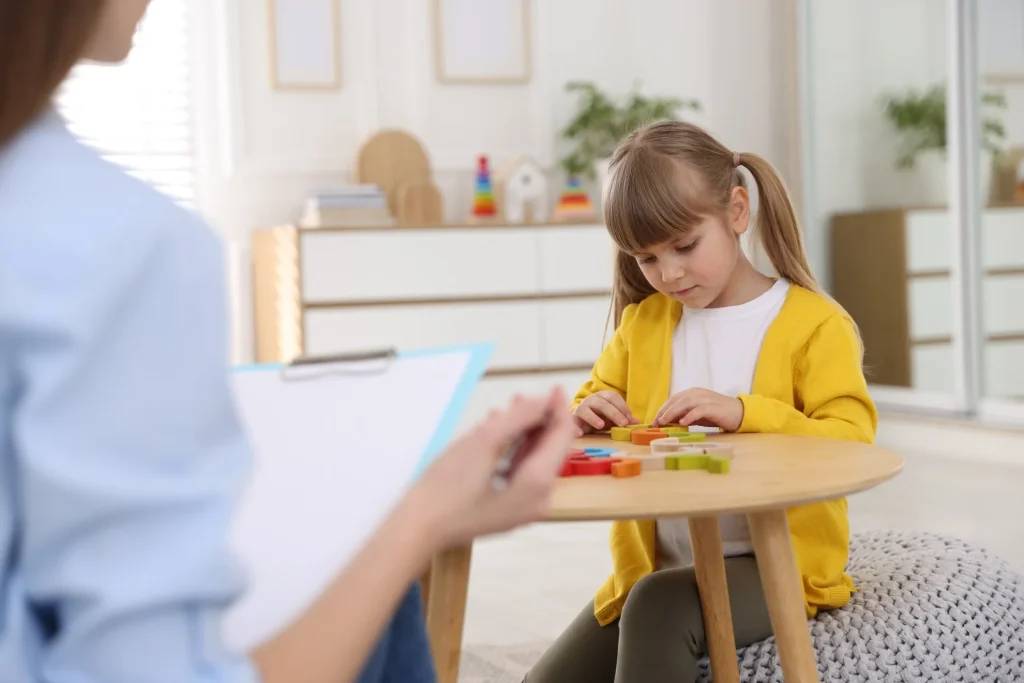

With a background in education, childcare, and NDIS behaviour support, I have experience working closely with children and their families, and I understand that you can’t look at one without considering the other. This is just as important in therapy. Children are part of many different groups, including their families, friendships, sporting teams, dance classes, bands, schools, and wider communities. The relationships and experiences within these groups shape how children see and interact with the world around them. There is no single right way to connect with a child, because every child is different and needs an approach that works for them.
In a recent session, I was reminded that “kids don’t come with a manual.” Even having an older sibling doesn’t mean you have a guide for the next child, and as children grow and develop, what works for them can change, too. My goal is to help bridge the gap between understanding a child’s needs and supporting the people around them to respond in ways that help. I don’t see myself as a parenting expert, nor do I believe that a few sessions with me mean I know a child better than their family does. Instead, I bring a fresh perspective and an understanding that parents are doing the best they can with what they know, just as children are doing the best they can with the skills they have. By working collaboratively with children and their families, I aim to build skills, strengthen relationships, and support wellbeing. This means helping children develop the skills they need to navigate challenges, while supporting parents to better understand their child’s needs and respond in ways that encourage resilience, emotional growth, and confidence in facing life’s challenges.
A lot can be achieved in a 50-minute therapy session each week, but like learning any new skill, the real impact comes from being able to practise and use those skills outside the therapy room. This is where the family environment plays an important role. Sometimes, this means having difficult conversations about how things at home might be making it harder for a child to practise what they are learning. These conversations are never about criticising or blaming parents, but about understanding why certain challenges might be continuing and working together to find ways forward. By looking at how parent-child interactions influence a child’s progress, therapy can support more than just the individual. It can also strengthen relationships, build on existing family strengths, and create positive changes that benefit the whole family.